

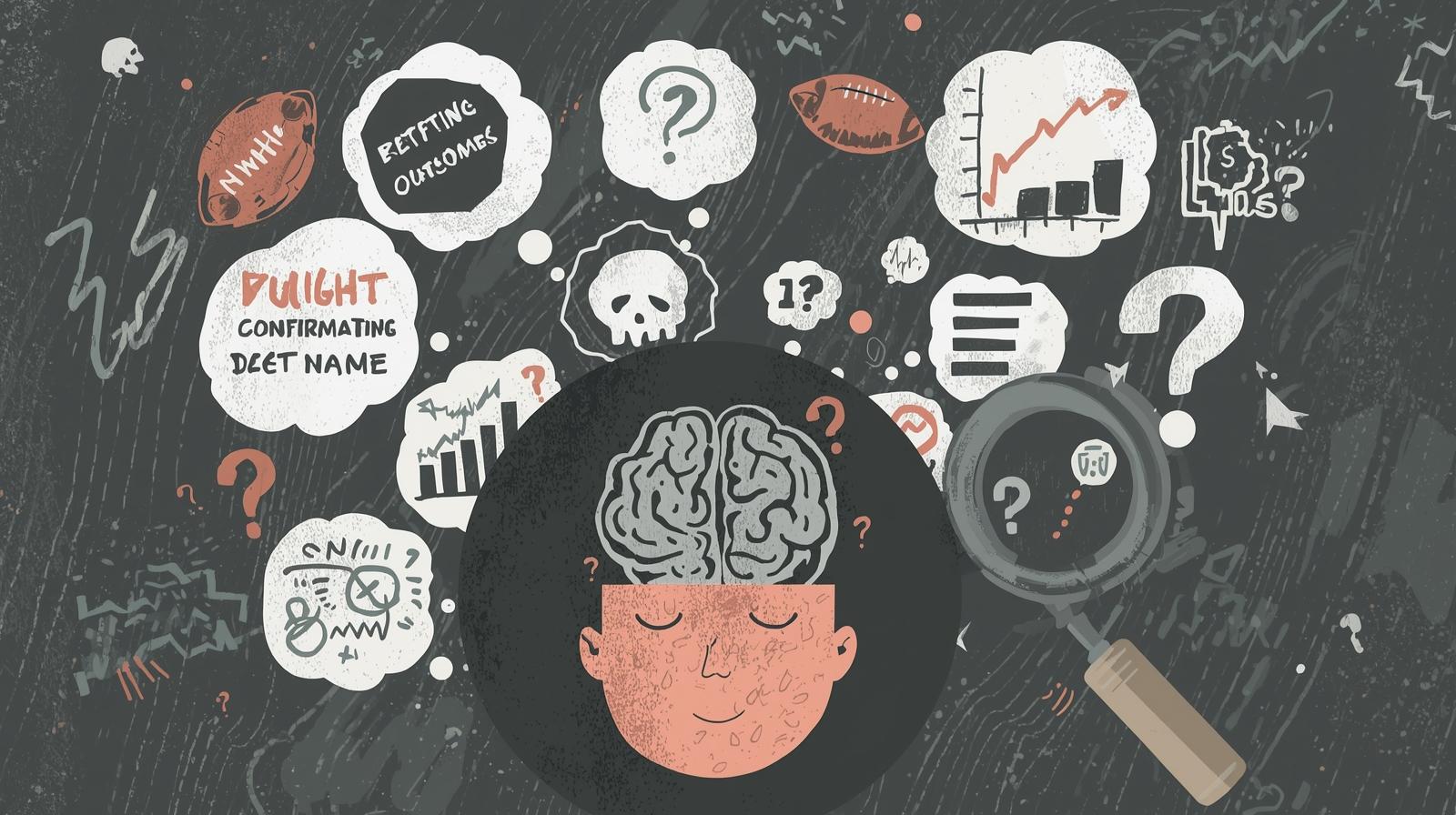

Most of us like to believe that decisions are made logically, by weighing information and choosing what seems most sensible. In reality, many choices are influenced by emotion first and reasoning second, especially in environments that feel fast, exciting, or uncertain. Sports and betting naturally combine all three, which makes emotional influence a normal part of the experience rather than something unusual.
Understanding this isn’t about correcting behaviour or changing habits. It’s simply about recognising how human thinking works in practice, particularly in moments that carry energy or anticipation.


Decisions aren’t purely analytical
Even when we try to be rational, the brain rarely processes every detail in a slow, methodical way. Instead, it relies on shortcuts that allow us to react quickly, and emotion is one of the most powerful of these shortcuts. It helps us decide efficiently, but it also shapes how we interpret situations before careful reasoning has fully taken place.
This happens constantly in everyday life, from shopping choices to conversations. Betting decisions are influenced by the same natural processes.
The influence of excitement
Live sports are designed to be engaging, and that engagement often shows up as excitement. A late goal, a comeback, or a close finish can change the emotional tone of a game in seconds, and that shift can carry over into how we think and decide.
When excitement rises, confidence often rises with it, and choices can feel clearer or more certain than they might during a calmer moment. The information hasn’t necessarily changed, but the emotional context has.
The influence of disappointment
Emotions don’t only affect decisions during positive moments. Losses or near misses can create frustration or disappointment that lingers, subtly influencing what feels like the “next step.”
In those situations, attention often turns toward restoring balance or correcting what just happened, which can make decisions feel more urgent than usual. The desire to respond quickly comes from the feeling itself rather than from new information.
This response is common across many areas of life, not just betting. It’s simply how people tend to react to setbacks.
Why logic takes a back seat
Logical thinking generally requires time and space. It involves pausing, reviewing details, and considering alternatives, which isn’t always easy when something feels immediate or emotionally charged.
When the pace increases, the brain prioritises speed over analysis, and feelings naturally guide the first reaction. Reasoning still plays a role, but it often follows rather than leads.
This sequence isn’t a flaw. It’s just the brain choosing efficiency in the moment.
Confidence and perception
Emotions also shape how confident we feel about what might happen next. After a few positive outcomes, things may seem more predictable or familiar, even though the actual uncertainty of events hasn’t changed.
That confidence can influence how new information is interpreted, with supportive details feeling more noticeable and contradictory signals feeling less important. Over time, this can subtly colour how situations are viewed.
Nothing about the event itself is different. Only the emotional lens has shifted.
The pace of modern platforms
Technology can amplify these patterns. Live updates, quick refreshes, and constantly changing options create an environment where decisions often happen within seconds rather than minutes.
With less time to reflect, emotional reactions naturally fill the gap, simply because they’re faster than careful analysis. The quicker the environment, the more noticeable this effect tends to be.
This doesn’t make decisions careless. It just changes the conditions under which they’re made.
Emotional influence is normal
It’s easy to assume that decisions should always be calm and logical, but that expectation doesn’t reflect how people actually think. Emotions are built into human judgement and help us stay engaged with what’s happening around us.
Without them, sports and entertainment wouldn’t feel nearly as compelling. The same excitement that makes a game enjoyable also plays a role in how we respond to it.
Seen this way, emotional influence isn’t a problem to solve. It’s simply part of the experience.
Seeing decisions more clearly
Recognising the role of emotion doesn’t mean trying to remove it. Instead, it means understanding that both feeling and reasoning are always working together in the background.
When you notice that excitement, disappointment, or confidence is shaping a moment, it adds context to why a choice feels easy or urgent. That awareness can make the process feel less mysterious and more grounded.
It becomes easier to see decisions as human rather than purely mechanical.
A clearer perspective
Betting decisions, like many everyday decisions, are influenced by more than logic alone. Emotions such as excitement, frustration, and confidence naturally affect how information is processed and how quickly choices are made.
This isn’t something unusual or incorrect; it’s simply how people think, particularly in fast-moving and engaging environments. Understanding that emotions play a role adds clarity, and that clarity can make the overall experience feel steadier, more predictable, and easier to navigate over time.