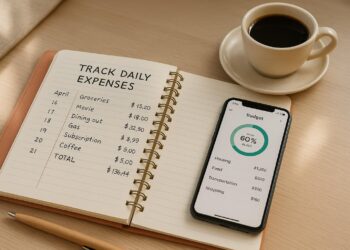



One of the simplest changes I’ve made to my betting over the years has nothing to do with odds, teams, or how often I place a bet. It’s simply how I think about the money.
Early on, I treated betting the same way I treated everyday spending. Deposits came out of the same account as groceries, bills, and everything else, which meant it all blended together and I rarely had a clear sense of what was actually going toward entertainment versus day-to-day life.


Nothing felt out of control, but it did feel vague.
And I’ve always preferred things to be clear.
So at some point, I stopped mixing the two.
How it used to work
When I first started betting, I didn’t separate anything.
If I wanted to place a bet, I’d top up directly from my main bank card and move on. It was quick and convenient, which seemed perfectly reasonable at the time.
The problem wasn’t the amounts. Most of my bets were small.
The issue was visibility.
Because everything came from the same place, betting transactions looked no different from buying lunch or paying for petrol. When I checked my balance at the end of the week, it was difficult to tell what I’d actually spent on entertainment.
A few deposits here and there didn’t stand out individually, and by the time they showed up on a statement, I’d usually forgotten what they related to.
It wasn’t stressful. It was just unclear.
Why mixing everything felt messy
I gradually realised that when entertainment spending and essential spending sit together, it becomes harder to judge either of them properly.
Bills feel fixed and necessary. Entertainment is optional.
When those two categories overlap, it’s easy for the optional part to feel less deliberate.
For example, spending €20 on a bet doesn’t feel the same as spending €20 on groceries, but if they come from the same pot of money, they start to blur together. You lose that mental distinction between “needs” and “extras.”
That blurring is what I didn’t like.
Not because it caused problems, but because it removed perspective.
And without perspective, it’s harder to stay intentional.
The small adjustment I made
The change itself was straightforward.
I started treating betting the same way I treat any other form of leisure spending, like going out for dinner or buying tickets to a match. Instead of dipping into my everyday account whenever I felt like it, I set aside a small, separate amount purely for entertainment.
Nothing formal or complicated.
Just a simple boundary between “living costs” and “optional fun.”
Sometimes that meant transferring a set amount at the start of the week. Other times it just meant mentally allocating part of my budget and sticking to that.
The method didn’t matter much.
What mattered was the separation.
What changed once I did that
Almost immediately, things felt cleaner.
Because the money was already set aside, there was no decision to make each time I wanted to bet. I wasn’t asking myself whether I should really be spending from my main account or whether something else might come up later.
The question had already been answered.
This is entertainment money. If I use it, fine. If I don’t, fine.
That clarity removed a surprising amount of friction.
It also made spending easier to see. When everything comes from one place, small amounts hide easily. When it’s separate, totals are obvious.
At any point, I could tell roughly how much I’d used and how much remained, without checking statements or doing mental math.
I didn’t have to track anything closely. The structure did the work for me.
Why it feels calmer
What I noticed most wasn’t financial – it was psychological.
Before separating things, there was always a slight sense of overlap. Betting felt connected to everyday money, which sometimes made it feel heavier than it needed to be.
Afterwards, it felt lighter.
More contained.
Betting went back to feeling like a small add-on to watching sport rather than something mixed in with responsibilities.
That distinction matters.
When entertainment spending feels separate, it tends to stay in its place. It doesn’t compete with bills or create second-guessing later.
You enjoy it for what it is and then move on.
How it fits into my routine now
These days, I don’t think much about it at all, which is probably the best sign that the system works.
There’s a rough weekly or monthly amount that covers anything I consider leisure — betting included. If there’s something I want to get involved in, I use part of that. If not, it just stays there.
No topping up midweek. No dipping into everyday funds. No wondering where the money went.
It’s predictable.
And predictable is exactly how I like it.
Because when betting feels predictable, it stays simple. And when it stays simple, it remains enjoyable.
Final thoughts
Separating sports betting from my everyday budget didn’t change how often I bet or how much interest I have in sport. It just changed how organised it feels.
Instead of everything blending together, there’s a clear line between what I need to spend and what I choose to spend.
That line removes uncertainty, and removing uncertainty makes the whole experience more relaxed.
For me, that’s really all it comes down to.
Betting is entertainment.
And entertainment is easier to enjoy when it has its own space.